Ask almost any financial expert what the first step toward financial security is, and you'll hear the same answer: an emergency fund. Not investments, not a fancy budget — a simple pile of cash set aside for when life goes sideways. A job loss, a medical bill, a car repair, a broken furnace in January. These things happen to everyone eventually, and the difference between a stressful weekend and a financial spiral is usually whether you had a cushion.
Yet most people don't have one. A surprising share of Canadians and Americans say they couldn't cover an unexpected expense without borrowing. The reason isn't laziness — it's that building a fund feels overwhelming when you're told you need "three to six months of expenses" all at once. So let's break it down into something actually doable.
Why it matters more than almost anything else
An emergency fund does one quiet, powerful thing: it keeps a bad event from becoming a debt event. Without a cushion, a $1,200 car repair goes on a credit card at 20% interest, and now you're paying for that repair for months. With a cushion, it's an annoyance you pay for and move on from.
It also buys something money can't usually buy: options. A fund means you can leave a bad job, weather a slow month if you're self-employed, or handle a surprise without panic. That peace of mind is the real return on this investment.
How much do you actually need?
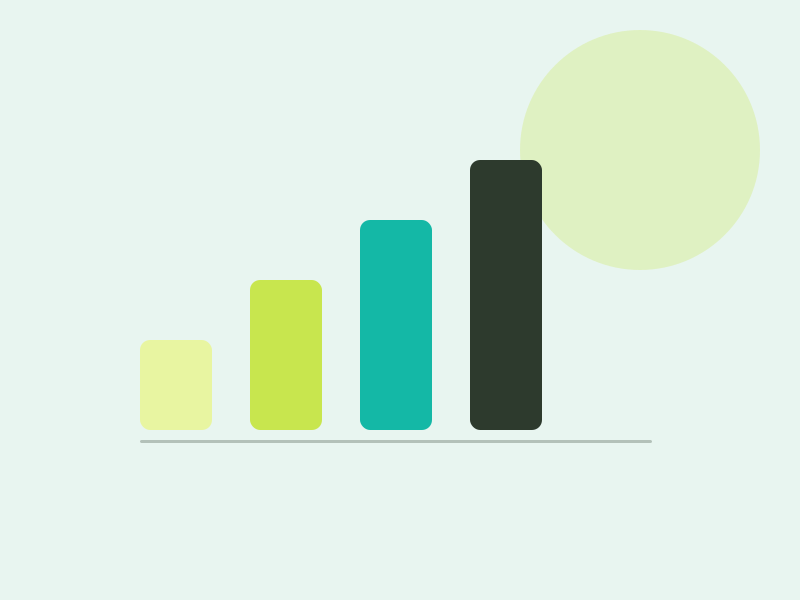
The classic advice — three to six months of essential expenses — is the long-term goal, not the starting point. Trying to hit it from zero is what makes people give up before they begin. Instead, build in stages:
- Starter cushion: $500–$1,000. This alone handles the majority of common emergencies — most car and home repairs, a surprise bill, a small income gap. Hitting this first milestone matters psychologically more than any other.
- One month of essential expenses. Enough to cover rent, food, and bills if income stops briefly.
- Three to six months. The full cushion, especially important if you have dependents, an unpredictable income, or a single-earner household.
Each stage is a finish line. You don't have to see the whole staircase — just the next step.
Where to keep it
An emergency fund has two jobs: be safe, and be reachable. That rules out the stock market (too volatile — it might be down exactly when you need it) and rules out locking it somewhere you can't access for days. The sweet spot is a separate, high-interest savings account: insured, liquid, and earning a bit of interest while it waits.
The "separate" part matters. Money sitting in your everyday chequing account tends to get spent. Money in a clearly labelled "Emergency" account stays put because there's a small psychological barrier to touching it.
How to actually build it
The mechanics are simpler than the motivation. Three principles do most of the work:
- Automate it. Set up a recurring transfer the day after payday, even if it's small. Money you never see is money you don't miss. $25 a week is $1,300 a year.
- Start tiny, scale up. A small, consistent amount beats a large amount you can't sustain. Begin with whatever's painless and increase it when you can.
- Feed it with found money. Tax refunds, work bonuses, a cancelled subscription, the cash freed up by trimming expenses — funnel windfalls straight into the fund instead of absorbing them into daily spending.
Finding the room in your budget
The hardest question is usually "where does the money even come from?" The answer almost always lives in spending you can't currently see. Forgotten subscriptions, creeping food-delivery costs, a category that's quietly grown — these are the dollars that can fund your cushion without changing your lifestyle in any meaningful way.
This is where clear tracking turns intention into action. TrackE5 connects to your Canadian or American bank through Plaid and categorizes your spending automatically, so you can spot exactly where the slack is — and redirect it toward your fund. You can set a savings target, watch it grow, and keep the whole picture encrypted and stored in Canada.

The first dollar is the hardest
Building an emergency fund isn't about discipline or income as much as it's about starting and automating. Set up one small transfer today. Hit that first $500. Then keep going. Future-you — the one facing a surprise bill with a calm shrug instead of a knot in the stomach — will be very, very grateful.
A cushion works best sitting on top of a budget you actually follow. If you don't have one yet, start with how to start budgeting at any age — and when you're ready to watch the fund grow automatically, TrackE5's free plan tracks savings progress alongside everything else.